




Manual Vs. CNC Stud Welding Machine: Which Is Better For Sheet Metal Production?
Oct 28, 2026
Залишити повідомлення
Stud welding is widely used in sheet metal fabrication to attach threaded studs, pins, and other fasteners to metal parts. It is commonly applied in electrical cabinets, control panels, enclosures, and industrial equipment.
When production demand increases, manufacturers often face a choice: continue using a manual stud welding machine or invest in a CNC stud welding system.

The right choice depends on production volume, workpiece dimensions, stud positions, labor availability, and required consistency.
In this guide, we compare the two methods to help you select a suitable stud welding solution for your factory.
1. What Is the Difference Between Manual and CNC Stud Welding?
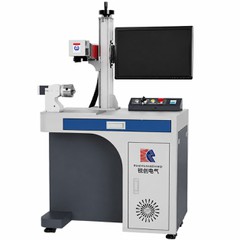
A manual stud welding machine generally requires an operator to position the welding gun at each required location. The operator controls the placement of each stud according to the workpiece drawing or marking.
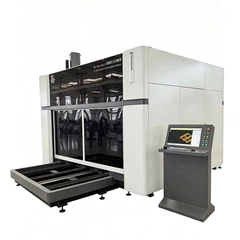
A CNC stud welding machine uses programmed coordinates to position the welding head automatically. Depending on the machine configuration, it may also support automatic stud feeding and multiple welding guns.
The main difference is how stud positions are located and how much of the welding process can be automated.


2. Manual vs. CNC Stud Welding: Key Differences
|
Operator-guided |
||
|
Coordinate-based positioning |
||
|
Often suitable for low-volume jobs |
Often suitable for repetitive, higher-volume production |
|
|
Can support automated feeding and multi-gun configurations |
Actual productivity and positioning accuracy depend on the machine design, fixture, stud type, workpiece, and welding process. A CNC system does not automatically guarantee better weld quality if the process parameters and workholding are unsuitable.
3. When Is a Manual Stud Welding Machine the Better Choice?
Your factory handles small batches or frequently changing jobs.
Stud locations vary considerably between workpieces.
Your investment budget is limited.
Operators can position the studs accurately and consistently.
Your production volume does not justify a dedicated automated system.
For maintenance workshops, prototype production, and lower-volume fabrication, manual equipment can provide flexibility without the additional cost of a CNC system.
However, operators may need to spend more time locating stud positions and handling repetitive welding tasks as production demand grows.
4. When Should You Consider a CNC Stud Welding Machine?
A CNC stud welding machine is worth considering when your factory produces sheet metal parts with repeated stud patterns or requires consistent positioning across multiple workpieces.
Electrical control cabinet doors and enclosures.
Power distribution cabinets and sheet metal panels.
Industrial equipment housings.
Repetitive production of metal components with multiple studs.
For example, a cabinet manufacturer may need to weld numerous studs at predefined locations on each door or panel. Programming the coordinates can reduce repeated manual positioning and make the process more consistent.
Depending on the configuration, automatic feeding and multiple welding guns may further reduce manual handling.

5. What Should You Consider Before Buying?
Before requesting a quotation, evaluate the following factors.
1. Workpiece dimensions
What are the maximum length, width, and thickness of your sheet metal parts? The working area must accommodate your actual workpieces.
2. Stud specifications
Provide the stud type, diameter, length, material, and required welding process. For example, capacitor discharge (CD) welding and drawn arc welding have different application requirements.
3. Number and position of studs
4. Production volume
How many workpieces do you process per shift or per day? This helps determine whether manual operation or CNC automation is more suitable.
5. Automation requirements
Do you need manual loading, automatic stud feeding, multiple welding guns, or a custom fixture? The right configuration depends on your production process.
6. Required welding quality
Discuss the base material, sheet thickness, stud material, and acceptance criteria with the equipment supplier. Sample testing is an effective way to evaluate the proposed process before purchasing.
6. Can CNC Stud Welding Reduce Production Costs?
CNC automation can reduce repeated positioning work and operator involvement, particularly when the same stud patterns are produced frequently.
However, the actual cost benefit depends on your production conditions.
Operator time per workpiece.
Total production volume.
Rework caused by incorrect stud positioning or poor weld quality.
Setup time for different workpiece models.
Equipment investment and maintenance costs.
For repetitive production, a CNC system may provide better long-term value. For occasional jobs or highly variable workpieces, a manual system may remain the more economical choice.
The best approach is to compare the expected cost per finished workpiece rather than equipment price alone.
7. Choose the Right Stud Welding Solution for Your Factory
At Luoyang Ruichuang, we manufacture stud welding equipment for different sheet metal production requirements, including manual and CNC stud welding systems.
Our equipment selection can be evaluated according to workpiece dimensions, stud specifications, production volume, and automation requirements.
Before recommending a suitable configuration, we encourage customers to share their drawings, stud specifications, and production needs. Where appropriate, sample testing can help verify process suitability before the equipment is finalized.
Workpiece dimensions and material.
Stud diameter, length, and material.
Number and positions of studs per workpiece.
Expected production volume.
Preferred automation level.
We can then evaluate the appropriate machine configuration for your application.
Послати повідомлення